
Exploring Side Hustle Opportunities? Retail Trading Might Be for You. See Who’s Doing It in 2025—and What the Data Says
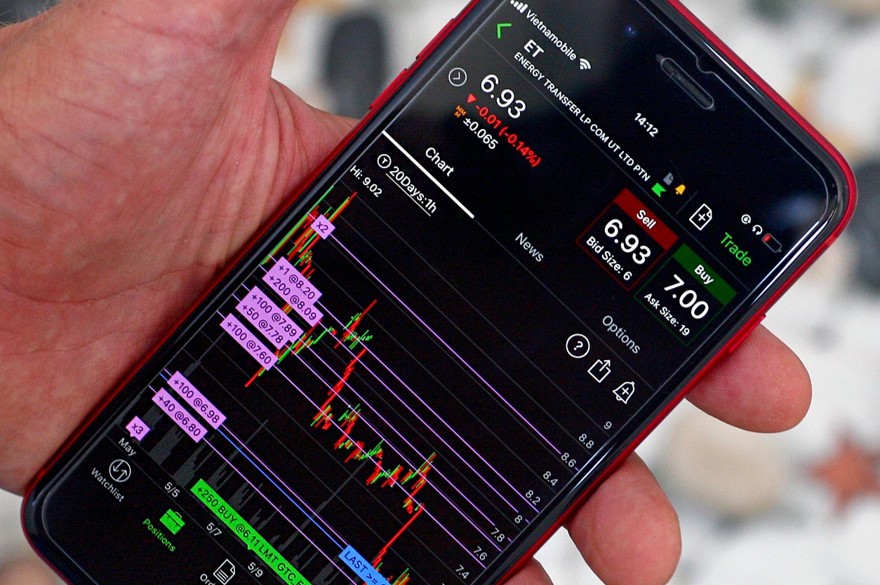
This is part 1 of our 3 part installment on investment data. In October, we randomly polled 43 retail traders and explored the evolving landscape of individual investing. Over the next few weeks, we'll share our findings in three parts:
- In the first part we'll cover demographical data about who retail traders are and how long they have done this as a side hustle to their regular job.
- In the second part, we'll tell you about their portfolios and in the last part, we'll share the brands they favour.
Then you decide : Should you get into retail trading?
First, what is retail trading? Retail trading refers to individuals buying and selling financial products for their own accounts, rather than through institutions or on behalf of clients. It’s often done online via trading platforms, and for many, it’s a side hustle, a hobby, or a way to build passive income. Retail traders can choose from a wide range of products depending on their risk appetite, market knowledge, and investment goals.
Here’s a broad overview of what retail traders commonly invest in:
| Product | What it is / How it works in brief |
| Stocks / Shares | Buying ownership in a company; you profit if the stock price rises and may receive dividends. |
| ETFs | Buying units of a fund that tracks an index or basket of assets; trades like a stock, gains from price movement and dividends. |
| Forex / Currency Pairs | Trading one currency against another (e.g., USD/SGD) to profit from exchange rate changes. |
| CFDs | Contracts that let you speculate on an asset’s price movement without owning it; profit/loss from price difference. |
| Commodities | Trading physical goods (gold, oil) or their derivatives; profit from price changes in the underlying commodity. |
| Cryptocurrency | Buying digital currencies on a blockchain (e.g., Bitcoin, Dogecoin); value fluctuates with market demand. |
| Options | Buying the right (not obligation) to buy or sell an asset at a set price within a time period; used to speculate or hedge. |
| Futures | Agreeing to buy or sell an asset at a set price on a future date; you are obligated to settle at expiry (can be closed earlier). |
| Bonds | Lending money to a company or government by buying a bond; earn interest (coupon) and principal repayment at maturity. |
| Index Funds | Buying units of a fund that mirrors a market index; gains from overall index movement and dividends. |
| Unit Trusts | Pooled investment managed by a fund manager; you own units of the fund which invests in stocks, bonds, or other assets. |
So who might be your everyday retail trader?
Retail Trader Demographics: Age, Gender & Occupation
Of the traders we polled, the youngest was 27 and the oldest 69.
27 year old Hao (not real name) works as a strategy manager and he has been trading for over 3 years. His product of choice? Stocks and ETFs. He monitors regularly and reckons he places a trade about once a fortnight.
Meanwhile our oldest participant is Jiang (not real name) who is retired. His source of income is mainly a 2 bedroom condo that he rents out for $4000 a month and so most of his time is spent monitoring his investments. He has been at it for just under 10 years and he dabbles in stocks, ETFs, Forex, CFDs, commodities and even cryptocurrency. His retail trading gains him about $1000-$2000 every month.
Both Hao and Jiang are male traders and we found that out of the 43 polled, there were more men than women traders.
- 67% are male, with an average age of 42
- 33% are female, averaging 43 years old
- Female traders range from 29 to 57 years old
When asked about their industries:
- 32% work in industrial and manufacturing (including oil & gas, petrochemicals, and engineering)
- 23% are in consumer, retail, and lifestyle
- 18% belong to healthcare, MedTech, or pharmaceuticals
These three sectors broadly account for almost three-quarters of retail traders who are working. Interestingly, there was only one participant from financial sector in our random poll.
Where are Retail Traders on their Career Ladder?

When we looked closer at the age and occupational profiles of our 40 working retail traders, we found that trading spans across career levels—from junior professionals to senior management. The largest age group was those in their 40s to 50s, making up 42.5% of all traders. This cohort includes executives, managers, and senior professionals who likely have disposable income and a strategic mindset toward investing.
Executives made up the single largest occupational group at 37.5%, with most in their 30s and 40s, though 5% were under 30—suggesting that leadership roles and trading aren’t mutually exclusive. Managers followed closely at 32.5%, skewing slightly older, with 20% in their 40s and 7.5% in their 30s.
Professionals and senior management each accounted for 15% of the sample. Senior management leaned older, with 5% aged 50 and up, while professionals were more evenly spread across age groups.
Snapshot: Retail trading spans across career stages—from junior professionals to senior management:
- Executives: 37.5% of traders, mostly in their 30s and 40s
- Managers: 32.5%, skewing older
- Professionals & Senior Management: 15% each
Overall, 12.5% of traders were under 30, showing that retail trading isn’t just for seasoned professionals—it’s gaining traction among younger career starters too. The data reinforces that retail trading is a cross-generational pursuit, appealing to those who enjoy strategic thinking, market dynamics, and the thrill of making informed decisions.
How long have they been at it?
When we examined how long retail traders have been active, we found that over one-third (34.29%) have been trading for 3 to 5 years, making it the most common experience range. This suggests a growing wave of mid-term traders who’ve likely entered the market during recent economic cycles or post-pandemic volatility.
Another 22.86% have been trading for 6 to 9 years, indicating a solid base of experienced individuals who’ve weathered multiple market conditions. Meanwhile, 14.29% of traders have been active for 10 to 13 years, and an equal 14.29% have been trading for more than 20 years, showing that long-term commitment to retail trading is not uncommon.
At the entry level, 5.71% of traders are relatively new, with just 1 to 2 years of experience. Interestingly, only 2.86% fall into the 17 to 20 year bracket, and 5.71% have been trading for 14 to 17 years, suggesting fewer participants with ultra-long tenure.
Age-wise, traders in their 40s to 50s dominate the 3 to 5 year bracket (14.29%), while those in their 30s to 40s are more evenly spread across 1 to 13 years of experience. The under 30 group mostly falls into the 3 to 5 year and 6 to 9 year categories, showing that younger traders are not necessarily beginners—they’ve already built a few years of market exposure.
This distribution reinforces the idea that retail trading is not just a passing interest—it’s a sustained activity for many, with a significant portion having built multi-year experience across different market cycles.
Snapshot: Retail trading isn’t just a passing interest—it’s a sustained activity for many:
- 34.29% have been trading for 3–5 years
- 22.86% for 6–9 years
- 14.29% for 10–13 years
- 14.29% for more than 20 years
- Only 5.71% are new (1–2 years)
Here are four trader profiles that stood out

- Ravi, 42 – Mid-Career Manager, 3–5 Years Trades stocks and ETFs monthly. Started during the pandemic. Treats trading as a strategic side hustle.
- Mei, 35 – Healthcare Professional, 6–9 Years Trades ETFs and commodities. Began during night shifts. Uses trading to diversify income and sharpen focus.
- Jiang, 69 – Retired Educator, 20+ Years Trades across stocks, Forex, CFDs, and crypto. Treats trading as a second career and intellectual pursuit.
- Hao, 27 – Strategy Manager, 3–5 Years Trades stocks and ETFs fortnightly. Sees trading as a blend of curiosity, discipline, and long-term planning.
What’s Next?
In Part 2, we’ll explore what these traders actually hold in their portfolios—how they diversify, what they avoid, and how experience shapes their choices. In Part 3, we’ll reveal the brands and platforms they trust most.
Follow our LinkedIn page to stay updated and catch the next installment. You might just find yourself asking: Should I get into retail trading too?