How Southeast Asia Moves: A Regional Snapshot of Everyday Fitness
In Southeast Asia, wellness isn’t confined to gyms or running tracks—it’s woven into daily life. From morning walks in Bangkok to weekend court games in Manila, health and fitness are increasingly becoming part of the urban rhythm. But what does exercise actually look like across the region?
We asked residents from five Southeast Asian cities—Bangkok, Jakarta, Kuala Lumpur, Manila, and Singapore—what activities they engage in for health, fitness, or exercise. With 4,275 responses collected, the results reveal a region that’s not just active, but diverse in how it defines movement.
The Top 12 Fitness Activities in South-East Asia
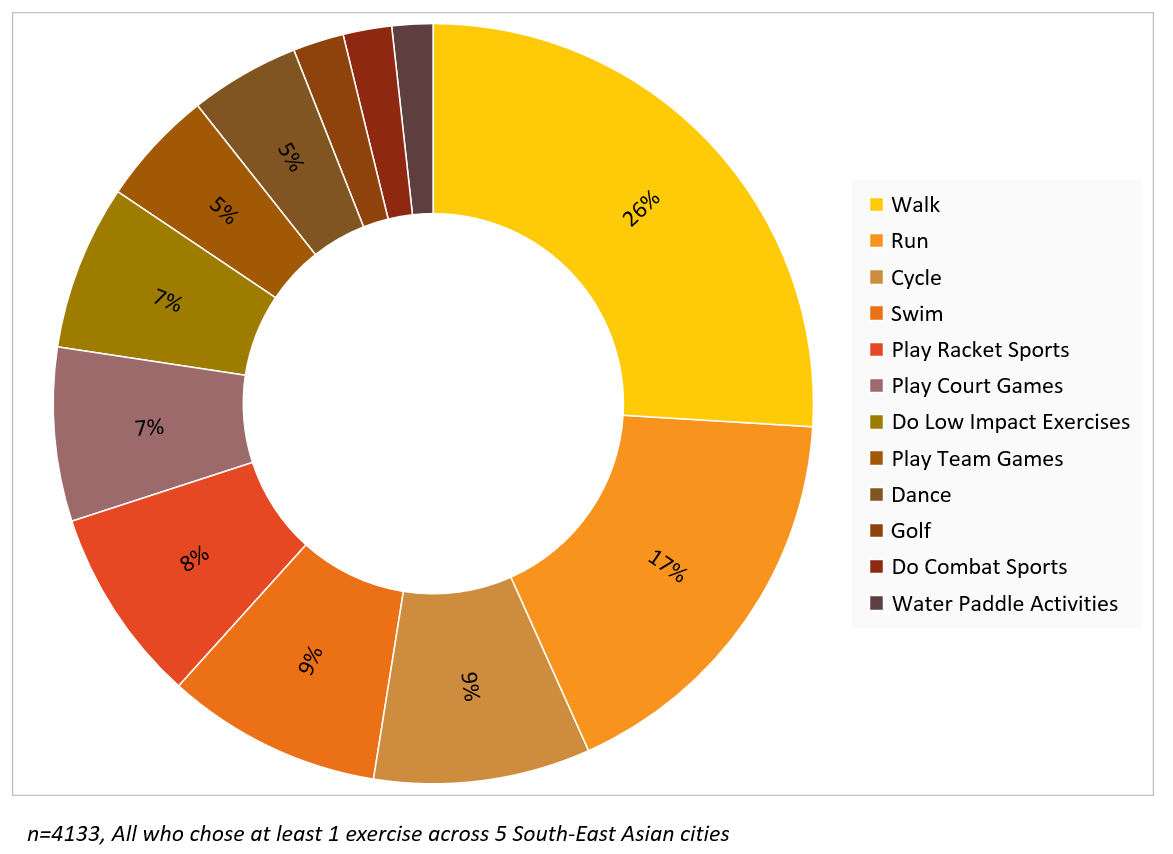
Only 67 participants said they don’t engage in any form of exercise, and another 95 listed activities outside our predefined categories. That means over 95% of respondents participate in some form of health or fitness activity—a powerful signal of how wellness is embedded in everyday life.
Walking: The Unseen Hero of Urban Wellness
Walking emerged as the most popular activity, accounting for 26% of all responses. But this isn’t just about power walking in activewear. In many Southeast Asian cities, walking is a functional form of fitness—a purposeful commute, a stroll through markets, or a conscious choice to skip motorized transport.
Running followed at 17%, suggesting that while high-intensity workouts are embraced, low-barrier, accessible movement remains dominant.
How Many Activities Do Residents Engage In?

Jakarta leads in activity diversity, with residents engaging in an average of 3.4 different fitness activities. This may reflect a growing wellness culture, increased access to community spaces, or a generational shift toward holistic health.
What This Means for Brands and Policymakers
- Urban wellness is rising: Walking, cycling, and low-impact activities dominate—suggesting demand for walkable infrastructure, safe public spaces, and inclusive fitness programs.
- Fitness is modular: Residents engage in multiple activities, often blending formal and informal movement. Brands should design flexible wellness ecosystems that accommodate this diversity.
- Cultural fitness matters: Dance, martial arts, and team sports may not top the list, but they reflect community, identity, and joy. These are powerful emotional levers for engagement.
Final Thought: Movement Is Culture
This study shows that Southeast Asians are not just exercising—they’re integrating movement into their lives. Whether it’s a jog before work or a weekend game of badminton, fitness is becoming a shared language of health, resilience, and community.
If you're exploring how to align your offerings with Southeast Asia’s evolving wellness culture—from modular fitness ecosystems to culturally attuned engagement strategies—we’d love to collaborate. Reach out to see how we can turn insight into impact, and movement into meaningful connection.
Data Source: Asian Women Index 2024 Report, Dynata Panel
Graphics: Pixabay